Archive for March, 2007

zBoost zPersonal - RepeaterStore to carry WiEx’s latest product

Wednesday, March 28th, 2007

RepeaterStore is proud to announce that it will be carrying the zBoost zPersonal cell phone repeater. Launched yesterday by Wi-Ex, the zBoost zPersonal will be compatible with both the 800MHz and 1900MHz frequency bands.

We are very excited about this latest development from WiEx. The zPersonal is unique on several levels.

The vision behind the product is to enable customers to quickly create transferable cell zones. The unit is designed to be portable, and to set up in minutes, meaning that customers on the go (between home and office, for example) will be able to take their cell phone repeater with them with ease. It will be available in wired and wireless versions.

But perhaps the most striking aspect of the zBoost zPersonal is its price. It will retail at $99, making it the most affordable cell phone repeater on the market by some distance.

After the success of the zBoost YX500/YX510 range in the consumer oriented cellular repeater market, we hope the zP may too have mass market appeal. It will be available from our website from June.

800MHz vs. 1900 MHz: When do you need dual band?

Tuesday, March 27th, 2007

An earlier post here discussed the upcoming database which will allow all our customers to determine what frequency repeater they need, instantaneously and free of charge. That database is nearly completed and due for release soon. In the meantime I thought I’d deal with a related question.

Cellular signals in the US are broadcast on two frequencies, either the 800MHz frequency or the 1900MHz frequency. The 800MHz frequency is also regularly referred to as the 850MHz frequency. This is because signals are actually broadcast on bands ranging from 824–849MHz to 869–894MHz. 800MHz and 850MHz is the accepted shorthand for these frequencies, and whenever you encounter them you can be assured they refer to the same thing.

Some networks, like T-Mobile or Cricket, will use only one frequency (1900MHz in this case) for all their services across the US. All customers can be assured that only a single-band repeater will be required.

Unfortunately, other providers are much more confusing. Some use a mixture of 800 and 1900MHz bands. Verizon, for example, use the 800MHz band for their voice services in most of the US, but in some areas, notably much of Texas and Florida, it uses the 1900MHz band. In all other areas 1900MHz is used for broadband.

The situation with Cingular is even more complicated. Since their merger with AT&T, they use a complete mix of frequencies across the US. Most of their voice services use the 800MHz, with exceptions in North and South Carolina, but this is by no means a hard and fast rule. Cingular hold licences for both frequencies in many areas, and often use both.

The source for some of this confusion lies in the irregular expansion of cellular providers in what is still a relatively young industry. Companies bought licences to use particular frequency bands in certain parts of the country. When providers merged, as with AT&T and Cingular recently, their licences did not always line up with each other. Many licences are now redundant, or overlap within areas.

This means that some customers may find a single-band repeater is not enough to solve their coverage problem. There are two main situations in which a customer might need to purchase a dual-band repeater.

The first is when a household uses two or more cell phones, on networks using different frequency bands. For example, if you are with T-Mobile, but your son or daughter’s network is Alltel, you may be using both the 800 and 1900MHz frequencies. If you wish to improve coverage for both phones, you will need a dual-band repeater.

Additionally, if you wish to improve both broadband data services and voice services, you may need a dual-band repeater. Our FAQ pages have more information on how cell phone repeaters do not just improve call quality and reduce dropped calls; they also help to speed up data transfer rates with broadband services. Many networks use the same frequency band for both cell phone signal and wireless cellular data cards (for example, Sprint). Other networks use different frequencies for both (like Verizon). Still others use different bands in some areas and the same band elsewhere (Cingular). If you wish to improve both services, you may need a dual band repeater.

How fitting…

Sunday, March 18th, 2007

Just came across this article on Cellular-News about strange positions cell phone users have to adopt in order to get better signal at home. Fits quite well with our post below!

Causes of bad cell signal (and can a repeater help?)

Sunday, March 18th, 2007

The majority of our customers visit RepeaterStore looking for a solution to their own, very specialized, cell signal problems. A common situation is a home or office with few or no signal bars and frequently dropped calls. Whether or not a repeater can help in this situation depends on the cause of the problem – which you the customer can usually determine quite easily.

Poor cell phone reception is an ubiquitous problem across the United States, and the causes of bad signal fall under two categories: localized poor coverage due to building materials or destructive interference, and geographical distance from or obstacles between your phone and the nearest cell tower.

Let’s deal with the latter first. Say you live in the middle of a desert, miles from a town or major road. If you are physically too far away from the nearest cell tower, and have to drive a couple of miles to get a signal, a repeater is unlikely to be able to help you, because it cannot create a signal where one does not exist already. Similarly, if you live on the side of a mountain, and the cell tower is on the other side of that mountain, a repeater is not likely to able to pick up a strong enough signal through that obstacle to improve your coverage.

So geographical reception barriers are often insurmountable. Fortunately, they are relatively rare. The cause of your bad cell signal is far more likely to be due to the construction materials used in your home or office, or destructive interference from the buildings around you. Cellular signals have a hard time passing through metal and concrete within the walls of your home. That’s why you might gain two or three bars of signal by hanging out of an upstairs window. Obviously, you can’t make all your cell phone calls like that (!), but you can set up a cell repeater there, magnifying the good signal to an internal antennae within the walls of your house and bypassing the ‘blocking’ effect of the building walls. Many buildings also use a wire mesh in their construction called a Faraday cage. This mesh blocks external static electricity fields, meaning that cell phone signals cannot get through. There’s a short article that touches more on construction material over at DeadCellZones.com.

Destructive interference runs along similar lines and is a particular problem in built-up areas. If you can’t get a signal in your Manhattan apartment, it’s obviously not because Cingular/Sprint/Verizon etc coverage is poor there. In cities, cell signals will be reflected from walls and other barriers and many separate signals will be found traveling in different directions. These different signals will interact with each other and some of these can be diminished in strength, which results in weaker cell signal for you. Luckily in these cases you will probably be able to get a reasonable signal nearby, and so again, a cellular repeater is an excellent solution. This article from slate.com has more on bad cell reception in city apartments.

A good rule of thumb is the following: if you can get a signal outside your home or office, but not inside, the problem is likely to be one of localized bad coverage which can be improved by a cellular repeater. Everyone’s situation is different though, and if you have any doubts, contact us to discuss your case in detail.

RepeaterStore to carry Wilson amplifiers

Friday, March 16th, 2007

RepeaterStore is pleased to announce that it will be carrying Wilson amplifiers and accessories.

Wilson is one of the longest established companies in the market. Their products are considered among the best quality available and we are delighted to have them in our catalog.

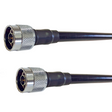
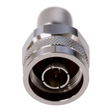
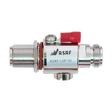
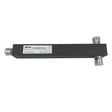
The inclusion of Wilson products means a significant expansion of our product range. For example, the inclusion of 60db amplifiers extends our product range to cover wider areas such as large offices and warehouses: The new 60dB wireless amplifiers increase the coverage of standard cellular repeaters by approximately 2.5 times. 60dB amplifiers will be available on 800MHz and 1900MHz frequency bands, as well as as an iDEN amplifier which supports Nextel - a first for RepeaterStore. An iDEN amplifier will also be available in the standard 50dB format, offering coverage of up to 2,500 square feet. The range also features new cellular repeater accessories such as antennas and surge protectors.

One new product we are particularly excited about is the SOHO dual band amplifier. Available shortly, we predict the SOHO will be one of the most popular amplifiers with customers. Designed specifically for home and small office environments, apartments, high rises, condominiums, and dormitories, it should fit very well into the consumer market.

Wilson products will be available for sale on RepeaterStore from next week, the Wilson catalog can be previewed by following this link:

Wilson Electronics Product Catalog